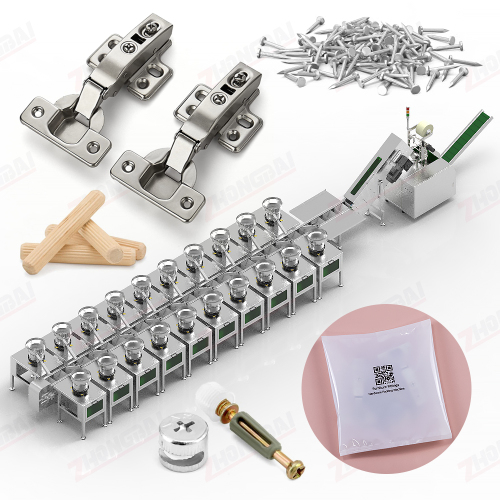
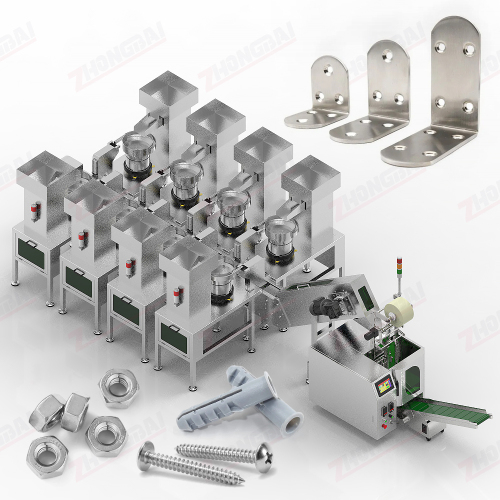
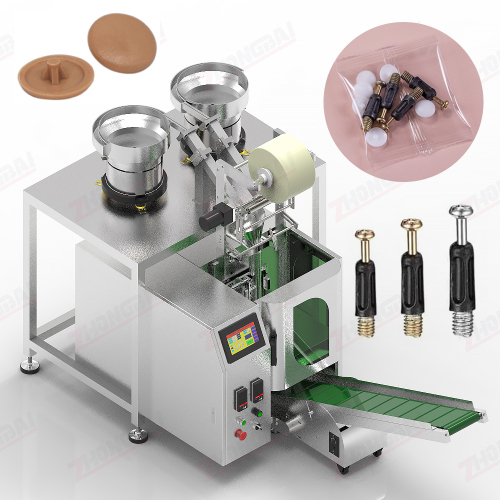
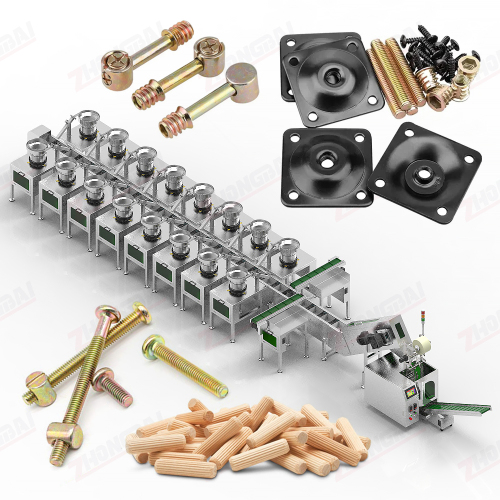
These are automated systems, often using a combination of vibratory bowls, counting sensors, and bagging systems, designed to handle small, non-uniform items. The typical process is:
Loading: Bulk fittings are poured into a hopper or vibratory feeder.
Counting: Optical sensors count the exact number of each component required for a single furniture kit.
Bagging: The counted fittings are directed into a plastic bag. Advanced machines can pack multiple different fittings into a single, organized bag.
Printing & Labeling: The bag is heat-sealed and a barcode/SKU label is automatically applied for tracking.
Output: The finished packs are discharged onto a conveyor or into a collection bin, ready for placement into the main carton.
What are the key advantages of a furniture fittings packing machine?
A. Operational & Labor Efficiency:
Dramatically Increased Speed: Machines can pack hundreds, even thousands, of kits per hour, far surpassing manual capabilities.
Labor Re-allocation: Frees up skilled workers from monotonous tasks to be redeployed to higher-value areas like machine oversight, quality assurance, or assembly.
24/7 Operation: With minimal downtime, these machines can operate continuously, maximizing output and asset utilization.
B. Quality & Accuracy Efficiency:
Virtually Zero Errors: Automated counting ensures a 99.9%+ accuracy rate, eliminating costly "missing parts" issues and associated customer service expenses.
Consistent Perfection: Every single pack is identical, ensuring a professional and reliable unboxing experience that builds brand trust.
C. Economic & Logistical Efficiency:
Direct Cost Reduction: Lowers cost-per-pack through reduced labor and waste (over-packing).
Indirect Cost Savings: Drastically reduces reverse logistics costs for shipping replacement parts.
Data Generation: Provides valuable production data (output rates, downtime) for continuous improvement and better production planning.
Optimized Inventory: Precise packing allows for better management of fittings inventory, preventing overstocking or shortages.
D. Supply Chain & Scalability Efficiency:
Eliminates Production Bottlenecks: The packing process keeps pace with other automated stages of production (e.g., panel cutting, CNC machining).
Agile Response to Demand: Scaling production up or down is as simple as adjusting the machine's runtime, without the complexities of hiring or laying off staff.


Quick-Change Components: Seek out machines with easily swappable parts, such as interchangeable counting trays, vibrating bowls, or nozzle sizes. This allows for a rapid shift between different types of fittings—from tiny screws to larger wooden dowels—with minimal downtime.
Programmable Presets: A versatile machine should store digital "recipes" or presets for every product SKU. With a few taps on a touchscreen, the system can reconfigure itself for a new pack size, count, and component mix, making short runs and custom kits as economical as large batches.
Modular Design: Opt for a modular system where additional units (like a second bagger or labeler) can be integrated as needs grow, without replacing the entire core infrastructure.